Big dreams start with small steps and we’re working towards making only a positive impact on the world. We can use textiles to bring health, comfort, beauty, and practicality to homes everywhere, but how they reach their destination and where they go afterwards are of equal importance to us.
Social Responsibility

Positive impact
Operations & Logistics
We strive to lessen our impact on the environment by improving our day-to-day operations. Towards achieving this, our Melbourne warehouse has been equipped with solar panels to offset our power usage and our Auckland head office is soon to follow suit.
Throughout our supply chain we are constantly optimising our processes to reduce the amount of packaging materials used. We are working towards the removal of single use plastic for all inbound and out-bound packaging and where possible we are reusing unavoidable single-use plastics. We endeavour to reuse all the fabric cores from incoming goods for our outgoing goods, and we collect cores from our customers to reuse.
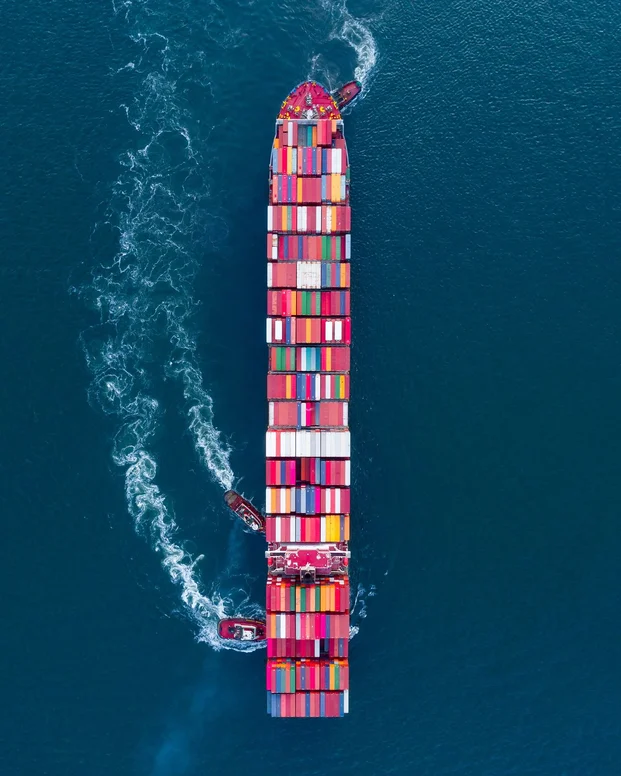
In recent years we have reduced the carbon footprint of our products by embarking on a major operational shift away from air freight, in favour of utilising sea freight wherever possible. To accommodate the longer lead times via sea we have changed our ordering structure and constructed purpose-built facilities to house additional stock holdings, minimising our reliance on emergency shipping options.
In the year 2020 to 2021 we increased our stock holdings by 50%, whilst reducing the amount of product moved via air freight by a further 10% to have a total of 87% of all products shipped via sea freight.
Sustainability
We have a commitment to being a socially responsible global citizen and carefully select our mills, production facilities, and fabrics to ensure we are developing textiles people want, with the least effect on the environment possible.

Eco Standards
The James Dunlop Group works with mills and fabric suppliers that adhere to the highest possible environmental criteria. Two important international certifications gained by our partners and suppliers are Oeko-Tex 100, which confirms our fabrics are free from harmful substances and are therefore safe for people and the environment, and ISO 14001, which specifies management processes to ensure the continuous improvement of an organisation’s environmental impact through its activities, products, and services.
Products certified to the Global Recycled Standard (GRS) contain recycled polyester that has been independently verified at each stage of the supply chain, from the source/recycler to the final product. In addition, certified organizations have met social, environmental, and chemical requirements (at each stage of the supply chain).

To find our more please visit out Environmental Standards page here.
Textile Recycling
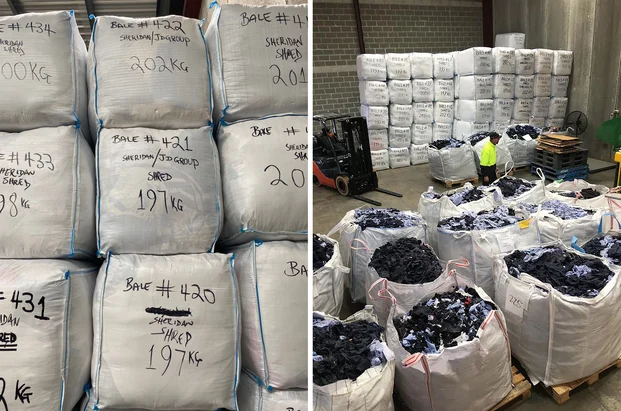
In late 2021 the James Dunlop Group became an official partner of TRAKS; a collaboration between Textiles Recyclers Australia and Karie Soehardi Consultancy. TRAKS operate a 'profit for purpose' model, working towards a circular economy by diverting textile waste from landfill where it cannot decompose and instead repurposing fabric to reappear on the market.
Textiles are collected by the James Dunlop team at our warehouse and showrooms in Melbourne and Sydney, before being transported to TRAKS’s sorting facility. The textiles are then shipped to TRAKS’s partner mills in India where they are shredded, washed, and rewoven into yarn which will become rugs and carpets.
“It’s disheartening to see our valuable fabrics going to waste and we know our customers are increasingly worried about unsustainable manufacturing practices. By joining TRAKS, we are not only helping to forge a viable resource recovery pathway for our unwanted materials but setting up these important recycling routes for the entire textiles industry to follow.”
- Andrew Mills, Managing Director of James Dunlop Textiles Australia.
Sampling
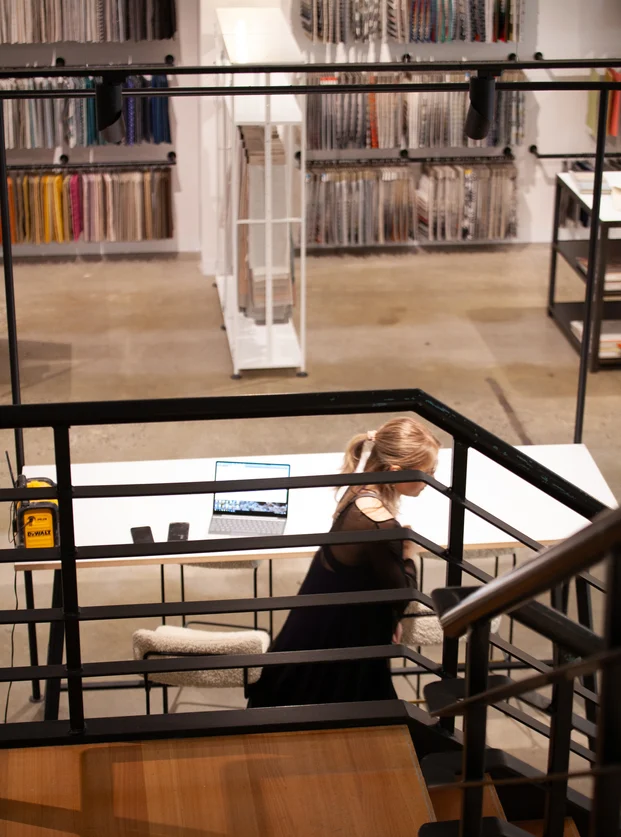
The use of samples within our industry is an unavoidable necessity but with a limited lifespan and high production footprint it is a key area that we are working towards re-inventing. To achieve this, a significant amount of our standard sampling has been reconfigured into a smaller memo format, reducing the amount of fabric required and in turn the amount of waste fabric.
Beyond physical samples, our suite of digital tools and services are revolutionising this aspect of our business. Fabrics can be visualised on curtains, furniture, or walls through our digital rendering programme, helping consumers to make informed decisions without requiring physical samples.
Our comprehensive online ordering platform has greatly reduced the need for instore visits by customers or sales reps and orders are grouped together so only one shipment is sent per day from the sample or memo workstreams to a customer, limiting both freight and packaging.
In the USA we work with Material Bank who consolidate samples from a range of suppliers across a variety of industries into a specially designed box, reducing packaging and shipments. Unneeded samples can be returned to be reused by future customers, recycled, and at their end of life are donated to design students instead of being sent to landfill. Aggregating samples reduces Material Bank’s carbon emissions and the remaining emissions are balanced by purchasing carbon offset credits which support projects such as forestry conservation and technology that captures gas before it is released.